I’ve said this before, but let me repeat it for the angels in the back: God hears me louder than anyone because I do not yell quietly.
Picture me in pajamas, hair in a chaos bun, pacing my apartment like an unhinged prophet in pajamas with a Costco-sized attitude problem, shouting at the ceiling: “HOW STRONG EXACTLY DO YOU THINK I AM?”
If faith is supposed to be peaceful, someone should tell my nervous system.
And yet… every time I scream, something steadier whispers back.
It wasn’t a brave montage. It was a tiny, shaking hand reaching for the phone, the intake form, the next breath.
Me, delivering my nightly “feedback” to God like He lives in my guest room.
⸻
😤 What I Yelled at God
A non-exhaustive list from the archives:
• “How strong exactly do you think I am?”
• “I’m so tired I can’t do this — just let me go.”
• “You think you’re funny? Is this fun for you???”
• “You KNOW I’m trying. You KNOW what I want. Can’t I have it yet?”
• “Why do I have to work this hard to escape trauma while the people who caused it skate through life like it’s a water park?”
These weren’t elegant prayers. These were feral, exhausted, emotionally-sweaty declarations.
He’s not mad. He’s just… used to me.
⸻
✨ What He Whispered Back
Not booming thunder. Not a sermon. Just small, steady nudges:
• Fortitude I didn’t know I still had.
• Signs telling me to rest — real rest, the kind that doesn’t require earning.
• Little miracles disguised as songs: Three Little Birds, Opalite, random music cues landing when my patience ran out.
• “Let It Be” drifting into my day right when I couldn’t force one more thing.
• Syncs from creators like Philgoodwithin that landed in the exact moment I needed them.
Sometimes the whisper was loud enough to feel like a hand on my back. Sometimes it sounded like: “Keep going. I’ve got you.”
Me accepting the smallest divine sign like it’s a personal prophecy.
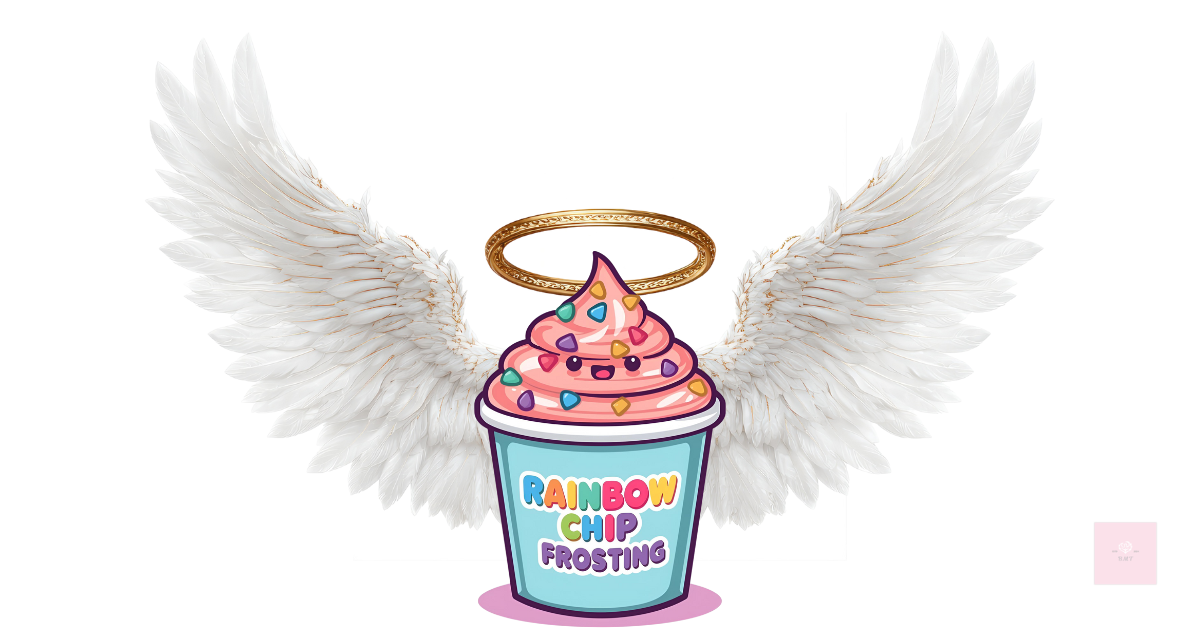
And sometimes the whisper was… frosting.
Heaven’s emergency backup plan for my attitude.
⸻
🩵 When God Actually Stepped In: TQRC
I will never forget the day things shifted.
Getting moved out of my first rehab into TQRC felt random on paper, but looking back, it was a divine reroute — the kind you don’t realize you needed until you’re standing somewhere healing finally fits.
Tyler was the first sign.
He didn’t sugarcoat despair; he named it. He taught me that the real version isn’t dramatic or cinematic — it’s the quiet kind that erodes your hope from the bottom up. He helped me see it without letting it own me.
Mark was the second sign.
The night I stood on an emotional ledge I didn’t want to admit to, he talked me off it. Not with platitudes. Not with fear. But by staying. Matching my breath. Sitting with my shaking instead of fixing it.
Then came the part no one sees:
They took away my plan. The plan I always kept close — too close. For the first time in years, I didn’t have an escape route in my back pocket. And instead of spiraling, I felt… safe. Held. Alive in a way that scared me, but also saved me.
Me, taking the tiniest steps toward healing before I even knew I was doing it.
And then came one of my favorite miracles.
I walked through the resident housing in my bathing suit without wrapping myself in a towel.
It wasn’t about a pool. It was about a confidence I thought I’d lost for good. A small, ordinary moment that said: “Look at you. Healing.”
Confidence doesn’t have to be loud to be crowned.
TQRC was full of those moments. Moments that made the yelling worth it.
⸻
🔥 The Truth Drop
Heaven’s final verdict: yelling permitted. Case closed.
God can handle your yelling. He’s not fragile. He’s not offended. He doesn’t flinch.
And the whispers afterward? They count as miracles — even when they show up dressed as a song, a sign, a therapist, a stranger… or rainbow chip frosting.
⸻
🌙 The Vibe
✨ Fierce
✨ Spiritual
✨ Tender
✨ Unhinged prophet in pajamas energy
⸻
🙏 Call to Action
If you’re in a season where every prayer sounds like a threat, you’re not failing. You’re not faithless. You’re human.
Tell me one thing you’ve been afraid to say out loud — to God, the universe, or even yourself. Leave it in the comments or shoot me a DM, if you need softer space.
⸻
🧀 Snack Call for Next Week
Next week’s emotional support snack: string cheese. (Which is honestly the perfect metaphor for healing — you pull it apart slowly, and it still tastes like hope.)
⸻
🎭 Closing Line | Residency Night Five
Breakthroughs don’t sparkle. They arrive looking like truth with a band-aid.
We open with me on the couch—graham crackers in hand, whispering affirmations into the general vicinity of my left kidney like it’s a roommate who still owes me rent. Healing, apparently, is a TV series with terrible scheduling and excellent wardrobe choices for crying.
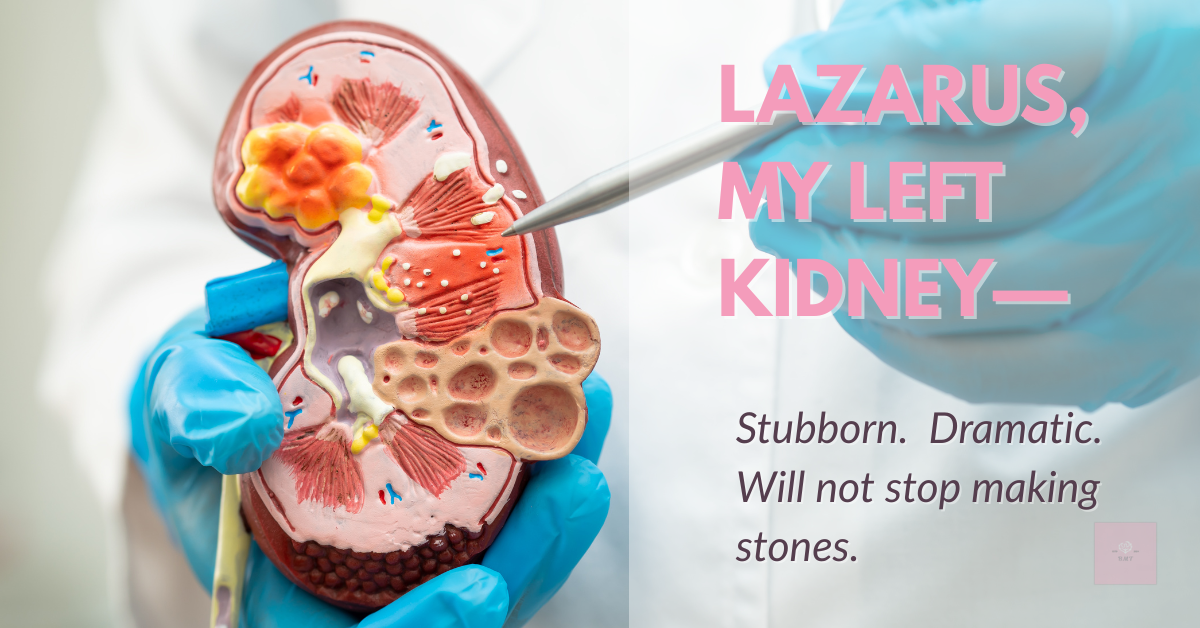
As you may recall… By June, I’d had enough kidney stone surgeries and ER visits to qualify for a punch card—“buy 10, get one free.” Somewhere between surgery #2 and the umpteenth CT scan, I started calling my left kidney Lazarus—because every time she almost died, she clawed her way back. Turns out Lazarus isn’t the only part of me that refuses to stay buried.
Waves are my new aesthetic. One minute the water is glass and forgiving; the next minute I’m guppying through a riptide of panic, wondering when someone added emotional sharks to the lineup. Healing doesn’t do straight lines. It makes loops, it gets lost, it shows up late and crying, and somehow—gradually—it moves you forward anyway.
⸻
🌊 Calm Before the Emotional Riptide
When I was in TQRC (my rehab), there were routines I could lean into—appointments, group, meals that arrived at regular times. For the first time in a long time, I started to practice believing the version of myself that could feel steady for a breath or two. I practiced pacing my breathing until my lungs actually hummed instead of snapping.
So when they told us there would be a shuffle and my old roommates were moving out, I had a meltdown at group. I said it aloud: that no one has ever really liked me, that the old roommates were a fluke, that I was too neurotic, too “high-maintenance” to be loved. I sobbed like it was inventory week and the shelf labeled “me” came up empty.
Exactly one week later, in that same room, during that same weekly meeting, one of my new roommates spoke up. Completely unprompted, she said how thankful she was for me—how I was kind, informative, caring, funny, sweet and awesome, and how she wouldn’t have made it without me. That I was the best roommate she’d ever had. I knew this had to be a Godwink moment, since she’d only been in the house 5 days which meant she wasn’t at the previous meeting.
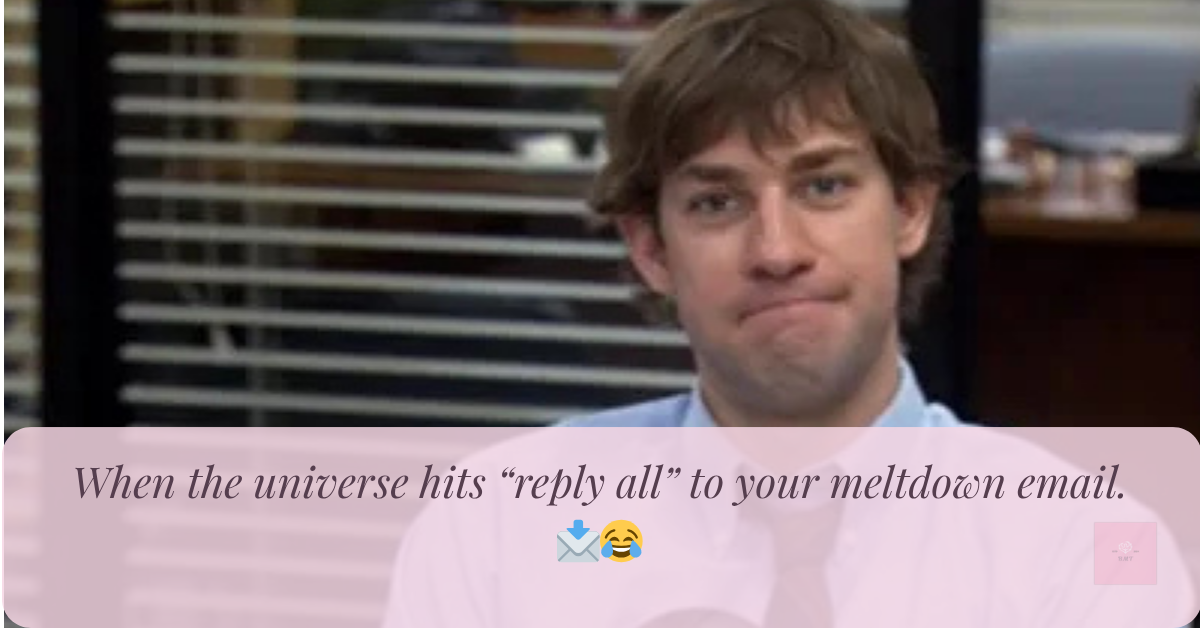
So, there it was: the universe hitting “reply all.”
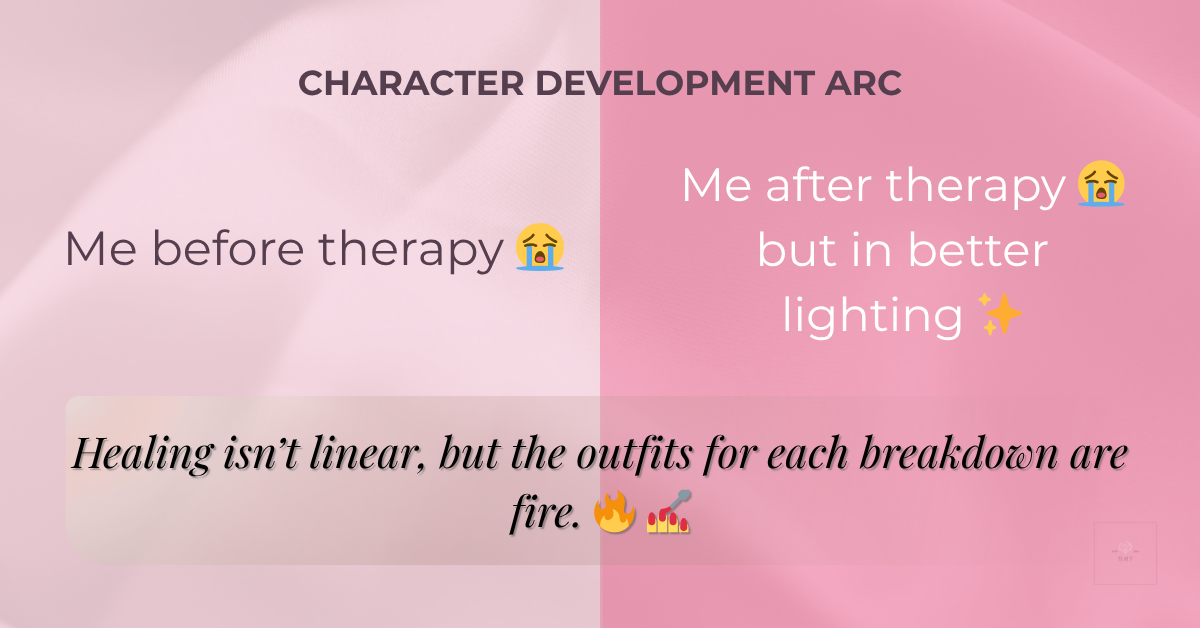
Honestly, if my life had a laugh track, this would’ve been the character development episode.
In the same circle where I’d confessed my fear of being unlikable, someone answered back with love—and did it publicly. If you’d told my past self that the list of things I was sure made me unlovable would be the very things someone loved—I would’ve laughed until I cried. Which is exactly what I did. Again.
That little group-room miracle was a thesis statement for me: sometimes healing is other people holding up a mirror and finally showing you what you couldn’t see. It’s not always dramatic. Sometimes it’s a sentence that lands like a bandage.
⸻
🚫 The Dad-Thing (The Arrival That Shouldn’t Have Been)
Later—during my hiatus from TQRC to manage medical chaos and more scans—my world got smacked sideways again. He came to town. Not invited, not announced in any kindly way that left room for me, just… present in the same city like a footnote I didn’t authorize.
Love that my trauma decided to host a surprise family reunion without checking my calendar first.
I never saw him. If it’s up to me, I will never see him again—because I have decided that for my safety, he is not allowed in my life. He came to attend an event he wasn’t needed at which caused me to miss an event I dearly wanted to attend. But knowing he was here did something the body understood before my brain could: it filed for emergency shelter. Panic, then freeze. I barely slept, I missed appointments including to my therapist. Just spaced it like it was never scheduled. I had nightmares that looped the same small humiliations he loved to taunt me with and the giant-sized fear he still evokes. For weeks I kept waking up with the same taste of dread.
I want to be explicit and honest about how it landed on me: at times I thought and said out loud, “I won’t feel safe until he is dead.” That is the jagged truth I have carried—more an expression of how unsafe he makes me feel than anything I wish to act on.
(For the record: I do not want him dead. I want him gone from my life, removed from my world, and removed from his power over me.)
Saying that out loud felt like vomit and confession and prophecy all at once.
“There’s no timeline for missing someone,” I wrote in Grief Has No Calendar.
There’s also no timeline for a panic attack triggered by an unexpected presence. Both feel ruinous and immediate. Both are allowed to be true.
⸻
🌀 When the Waves Collide
Medical recovery + mental recovery + old family dynamics = a blender with no lid. The renal surgery drama (hello, Lazarus) and the emotional vertigo of family ghosts don’t stack politely. They slam into each other and make a kind of wreckage that takes time to sift through.
Here are the facts: sometimes your nervous system regresses not because you failed, but because it finally feels safe enough to process what it’s been protecting you from for years. Sometimes collapse is the only way the thing inside you can come up for air and start to reorganize. The spiral is not the same as being stuck. It’s not a backward replay so much as a deeper rewrite.
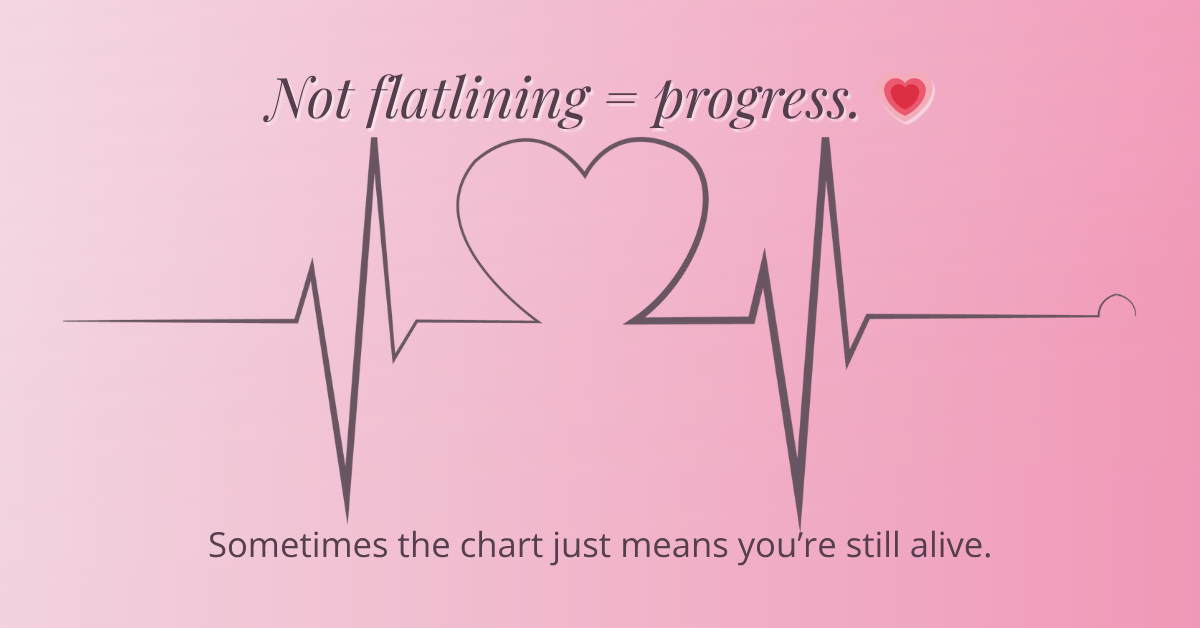
If my progress had a chart it would look like an EKG—jagged, alive, occasionally dramatic at 3 p.m. and profoundly quiet after snacks. It’s messy, but it’s life.
⸻
💡 Tiny, True Things I’ve Learned
• Safety teaches the body more than pep talks ever will. Repetition builds safety. Repetition heals.
• Witnessing matters: being told you are seen, even once, can change a brain.
• Codependent impulses will flare when old roles are reintroduced. That flare is not failure. It’s data—information about what still needs protection and boundaries.
• The breakdown is often the beginning of the build-back. The cry can be a repair.
• Sometimes the bravest thing I do all day is not throw my phone at the universe. Ten out of ten recommend restraint.
⸻
🌅 The Shoreline (Tender + Defiant)
There are days I am exhausted and days I feel like a soft, fierce version of myself. Both are true. The ocean does not apologize for being loud sometimes. Neither will I.
I used to think healing meant never falling apart again. Now I know it just means I’ve learned how to hold myself when I do. I am learning how to float when the tide pulls too hard, and I am learning how to walk out of rooms that don’t feel safe. I am learning that moving might be the map to the safety I need—and that’s an action, not a surrender.
So yes—I’m still healing. No—it’s not linear. And also: I am still here.
I will show up for myself again tomorrow, even if it’s with graham crackers and a cookie sheet of band-aids.
⸻
🗨 Call to Action
If this week’s post hits somewhere deep—share it. Not for the algorithm, but for the reminder that we’re all still learning to stay above water.
Tag someone who’s been your mirror, or drop one thing you’ve learned about healing in the comments. Let’s normalize the messy middle together. 🩷🌊
⸻
🍪 Snack Call for Next Week
Residency Night Five is coming in hot: “Things I’ve Yelled at God (And What He Whispered Back)”
Bring cookies for bargaining, tea for repentance, and a tub of rainbow-chip frosting—otherwise known as my emotional-support frosting.
Because sometimes the holiest thing you can do after yelling at God is eat something colorful and forgiving. 💓🌈
⸻
🎭 Closing Line | Residency Night Four
Breakthroughs don’t feel shiny; they feel like truth with band-aids.
Sometimes they show up in group therapy rooms and nightmares, sometimes in unexpected words from people who see you clearly.
They sting, they stick, and they heal in layers—proof that the messy middle is still progress.
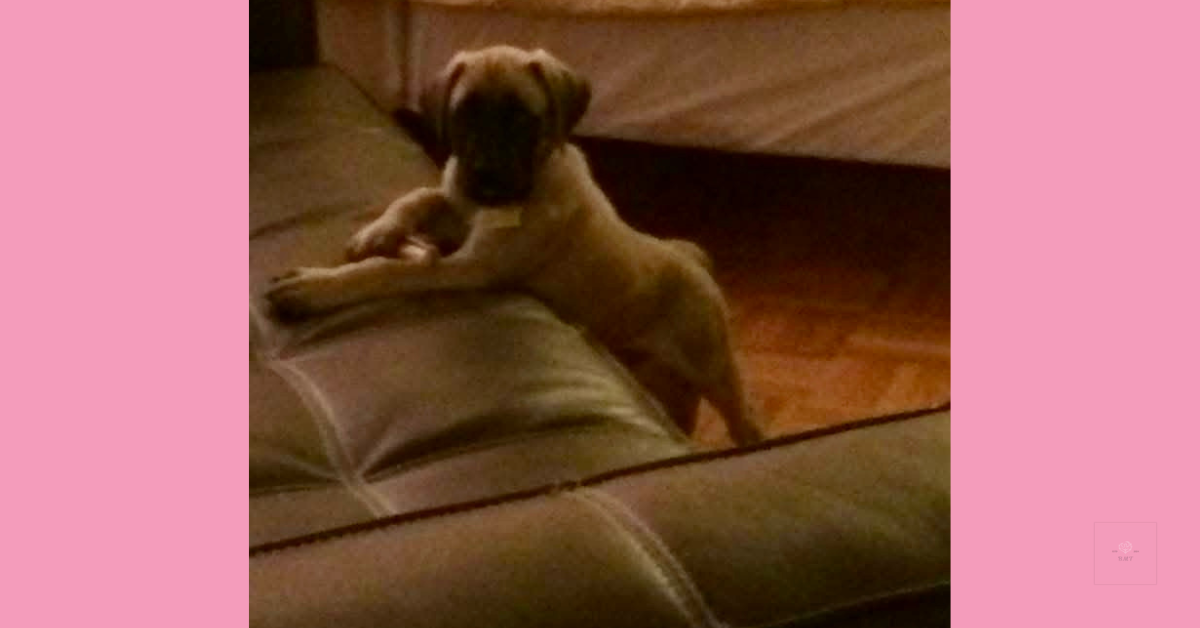
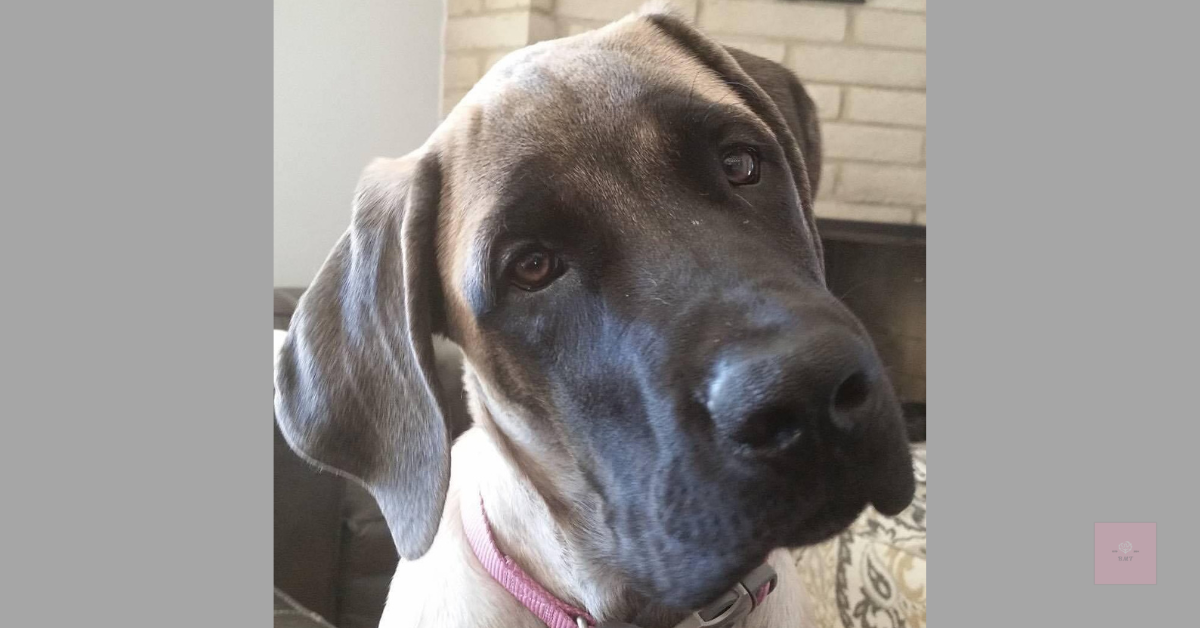
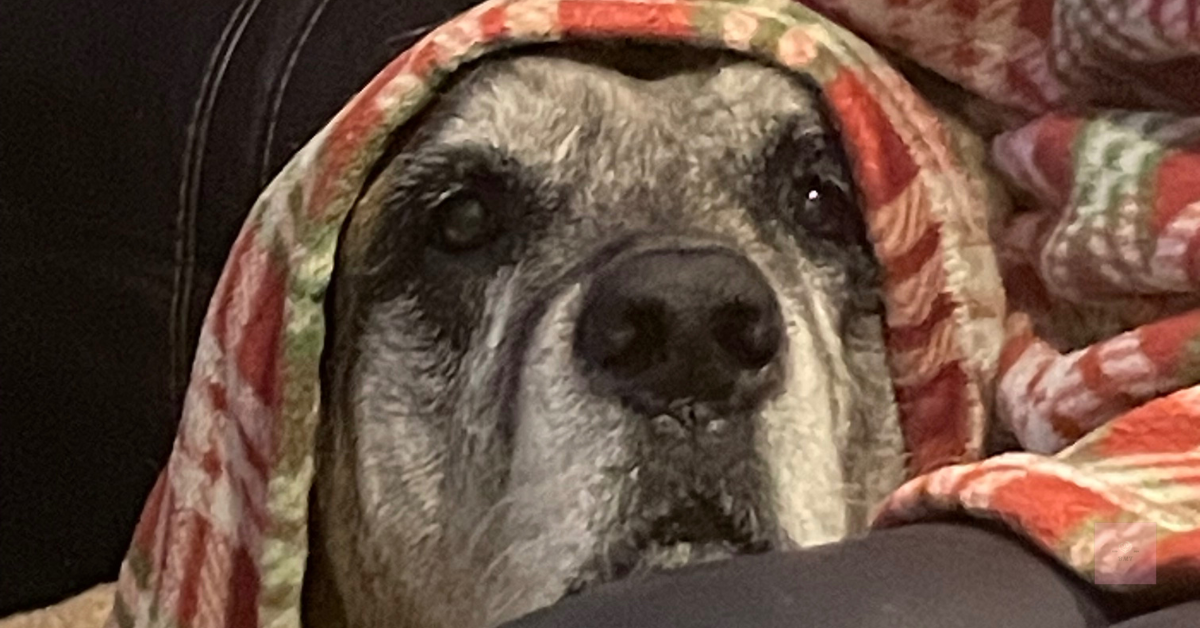
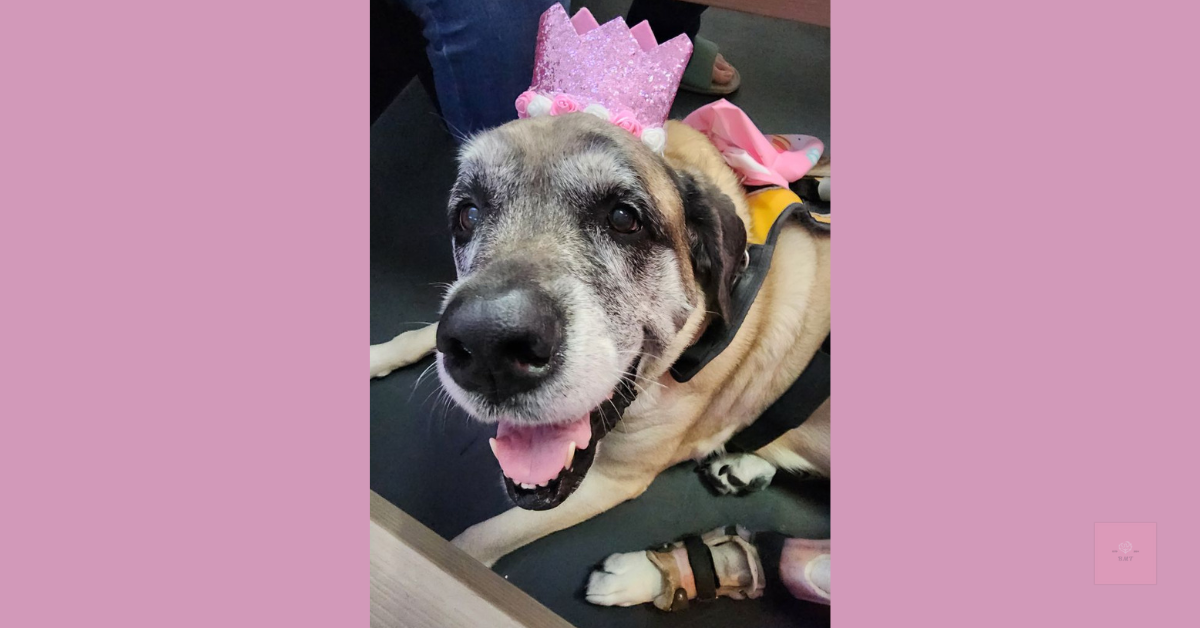
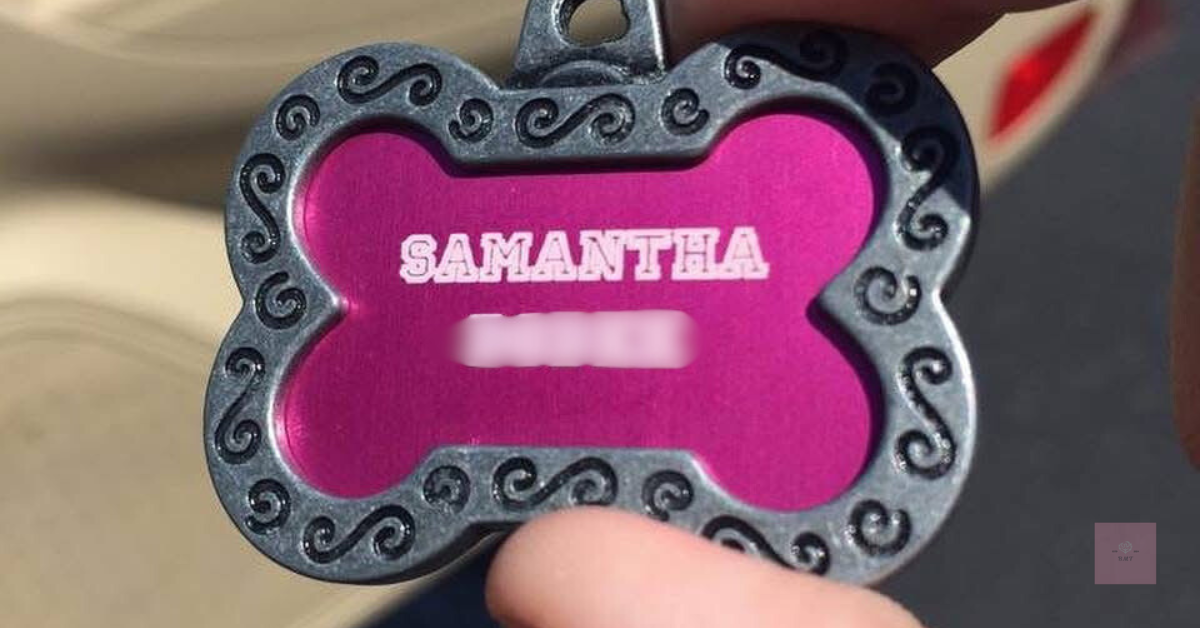
My baby Samantha was born in August of 2014. She was the sweetest puppy — a cute little girl with an adorable potbelly, so loving and playful and full of energy. Seeing how small she was when I brought her home (15 lbs) to how big she got full-grown (160 lbs) is astounding. She was so smart and funny and the absolute light of my life.
“Where it all began.”
In the beginning, training her was extremely easy, and I hoped she’d become a therapy dog — but her stubborn, free-spirited independence (one of the things I loved most about her) proved to make that dream impossible.
She was truly my child, and there wasn’t anything I wouldn’t do for her.
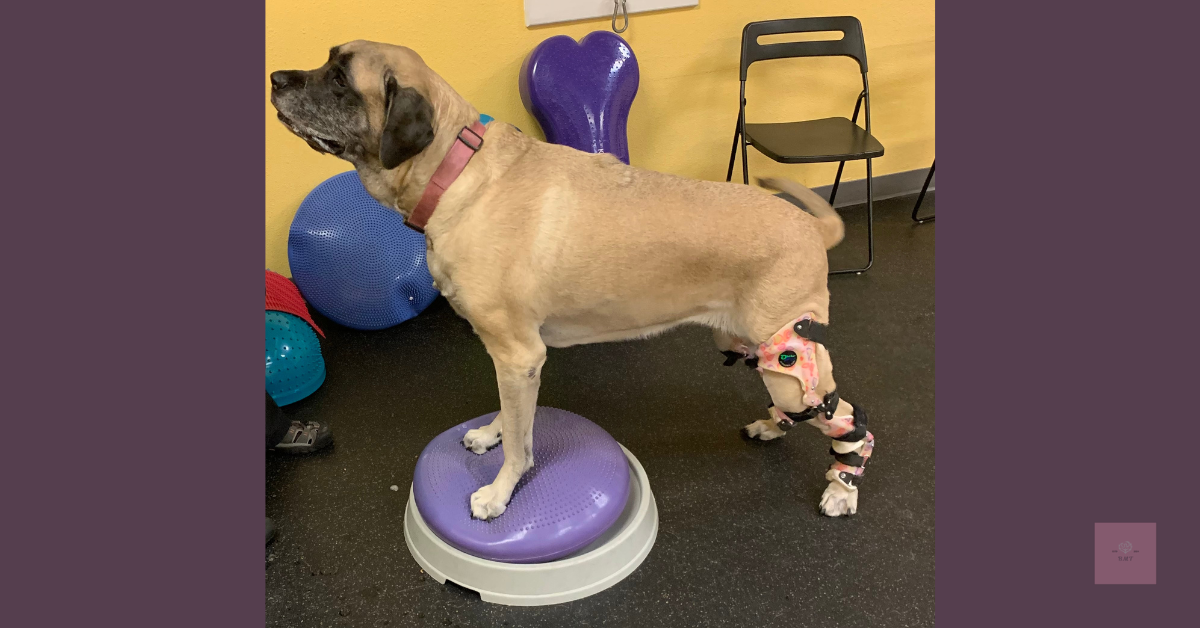
She had some medical issues, and I was by her side through all of them — from literal growing pains to her blowing out her ACLs and getting 3-D-printed back-leg braces. She hated thunder and fireworks, and I would lay in the bathtub hiding with her until she got too big to hold. Then I started planning overnight trips out of the area for New Year’s and the Fourth of July to keep her comfortable, because her anxiety would cause her to “dig to the center of the earth.” Leaving was easier — even when it was expensive. Because replacing rugs is expensive too, but watching her peace return was priceless.
She was my ride-or-die, and we had the best relationship.
I’m going to take the rest of this blog to share some of my favorite stories to remember her.
🔔 The Jingle Bells Routine
Because of her size, Samantha didn’t have a doggy door — she had jingle bells tied to the sliding glass door. She’d ring them when she wanted to go out, but only after I was settled. Never before. Always once I was fully comfortable.
She was the same way when coming in. I’d try to convince her to come inside before I sat down, and she’d insist she was staying out a while — or suddenly act like she couldn’t hear me. Then, once I had my chair reclined, sure enough she’d be scratching at the door.
When I wanted her to do something, it had to be on her schedule. But when she wanted something — especially to go in or out — she’d ring the bells or scratch over and over, louder and louder, if I wasn’t moving fast enough. In her later years this sassy attitude only grew stronger, and I loved that about her. She was her own dog.
That sound of the bells still echoes in my memory like wind chimes for the soul. Sometimes I swear I hear them in the quiet and, for a heartbeat, I forget she’s gone.
🍔 The Drive-Thru Years
Her favorite outings were always the drive-thrus—In-N-Out for her pup patty, Dutch Bros for a whipped-cream mustache and a new set of admirers.
She’d watch the vegetable-cutting operation at In-N-Out with the focus of a head chef inspecting her line cooks. And the night she barked loud enough between the payment and pickup windows that the entire staff came running to wave? That was her Super Bowl.
At Dutch, she was basically famous. Baristas leaned halfway out of the window to hand-feed her the pup cup and film their “favorite customer.” For Samantha, people weren’t strangers—they were an audience for joy. Truly, her love language was strangers and whipped cream.
“That look that said she understood everything.“
🐦 The Curve-Billed Thrasher Chronicles (and Other Backyard Politics)
And then there was the bird.
Not just any bird — the curve-billed thrasher, Samantha’s sworn nemesis. It perched on the backyard wall like it paid rent, chirping purely to test her patience.
Even if she heard that same call through my phone while talking to a friend, she’d growl — grumpy justice delivered from the couch.
She also chased off the doves with righteous determination, yet somehow found time for a daily play date with the neighborhood squirrel — a chase-and-pause duet that looked more like friendship than fury.
Samantha ruled her little kingdom with firm but fair paws: defending the perimeter, disciplining the birds, entertaining her squirrel subject, and alerting anytime an errant leaf ended up in the pool — all in a day’s work.
Every soul has its nemesis. Hers just happened to have feathers… and an audience.
💪 The Therapist’s Favorite (and Mommy’s Too)
When Samantha got her leg braces, she had to go to weekly physical therapy. Her therapist, Kate, was her second-favorite human — only behind Mommy. Going to see her was the highlight of her week. I couldn’t say Kate’s name the night before her sessions because then Samantha wouldn’t sleep; she’d be too excited to go see her.
“Rehab queen 👑—still showing up for herself.”
As she got older her mobility kept slipping, she would still get excited and jump around, bossing the birds and playing with the squirrel, and you could see her pain as her joints struggled for the next several days. Kate’s weekly massages became her lifeline. The moment Kate laid her hands on her, you could see relief ripple through her. She’d walk out like a new dog — looser, lighter, ready to chase life again.
Honestly, losing Samantha broke Kate’s heart too — she’d worked on her body, but it was her spirit that left the bigger imprint.
“My Old-lady baby, safe and warm.“
🕯 When She Left (and What She Taught Me About Staying)
Her last days were hard, both of us hurting in different ways. I had a stent in and surgery just days ahead; she had her tired body and her enormous heart still trying to follow me from chair to chair. In those final minutes, she reached for my hand and made me hold her paw — still comforting me, even then.
“Her royal fluffiness.“
I wasn’t right beside her when she passed, but we were in the same room, and I know she knew. Because love like that doesn’t need proximity; it’s already in the air between us.
She went so quickly — she tried to sit up and collapsed. She left before she hit the ground, spared the pain, wrapped instead in mercy. The silence was immediate; the whole feeling in the room shifted.
The moment she left, her face changed. She didn’t look like my Samantha anymore. And that was the strangest kind of comfort — proof that the soul goes somewhere, that the light inside her simply moved on. Because I was alone when it happened, that change actually made the business part of death a little easier to handle — from getting her put into the car by my rock star neighbor and his son, to taking her to the funeral home, to processing all the paperwork.
A month later, my roommate decided to get two new dogs. He said the house was too quiet, and since I was going to leave for rehab, he needed companions. I’m convinced she still clocks in as a celestial training manager. She loved to play a game known as “no kisses for Mommy,” and Rusty is a master at that game. Daisy, meanwhile, loves to chase lizards and bugs, and her technique is eerily similar. None of them are the same breed, so it’s not a breed trait — it’s a Samantha trait.
🌙🌕 Mini-Eulogy | For Wupples, My Old Lady Baby
Her name was Samantha, but to those who loved her best, she was Wupples — my old-lady baby, my secret service, my emotional-support dog, and the one true love of my life.
She got me through the deaths of my cats and my grandparents, through hospital stays and heartbreaks, through every moment when I didn’t think I could do it alone. She never left my side — unless a broomstick or a hanger dared to block her path, in which case she’d cry until I moved it.
She was a treat connoisseur who eventually trained us. One for getting into bed, another for getting back into bed after midnight potty breaks. She believed every good deed — standing, blinking, existing — deserved dried liver.
She was a master of routines. Ice cream was her nightly ritual — first from Dairy Queen, then, when her body couldn’t handle eating the soft serve cold so fast, a scoop of Blue Bell or Breyers hard-packed ice cream met her dessert needs before sleep.
When she knew it was bedtime, she didn’t take no for an answer. She pouted and threw a fit until we went to the bedroom. But if I had to stay up late, she’d stay too, sighing gently, waiting for me to remember that rest is sacred.
I still feel her everywhere. In the quiet. In the jingle of old bells. In the drive-thru laughter of strangers who once knew her name. I swear I can hear her breathing or grunting to get my attention for an extra treat late at night — and I hope I always do.
🌿 Reflection
Grief doesn’t punch a clock. It doesn’t show up neatly on anniversaries or fade on schedule. Some days it’s quiet, like the echo of her nails on the floor in another room. Other days it hits like the slam of a screen door — sudden, sharp, uninvited.
But the truth is, grief is just love with nowhere to go. It’s proof that something beautiful once existed, and that part of it still lives in you.
Samantha taught me that routines are sacred because they anchor us in love: the nightly ice cream, the bedtime rituals, the way she refused to let me forget that joy doesn’t need a reason — it is the reason.
So if you’re missing someone — fur, feathers, or otherwise — don’t rush your healing. Grief has no calendar.
Because Samantha wouldn’t want tears without treats, go get a pup cup, a cookie, or a drive-thru fry. Do it in her honor. And if a bird side-eyes you on the way — bark once for her. 🐾
“Signed with love, forever hers.“
💕 Before You Go
If this post reached your heart, share it. Tell someone about your own Wupples. Post a photo, light a candle, or buy the treat your pet used to love. Grief can feel lonely — but remembering out loud brings them back to life for a moment.
And if you’re still in the thick of it — still missing, still aching — me too. Let’s promise to keep showing up for love anyway.
🍪 Snack Call | Because Ritual Matters
Next Week: Yes, I’m Still Healing. No, It’s Not Linear.
A love letter to the messy middle, where progress looks suspiciously like standing still.
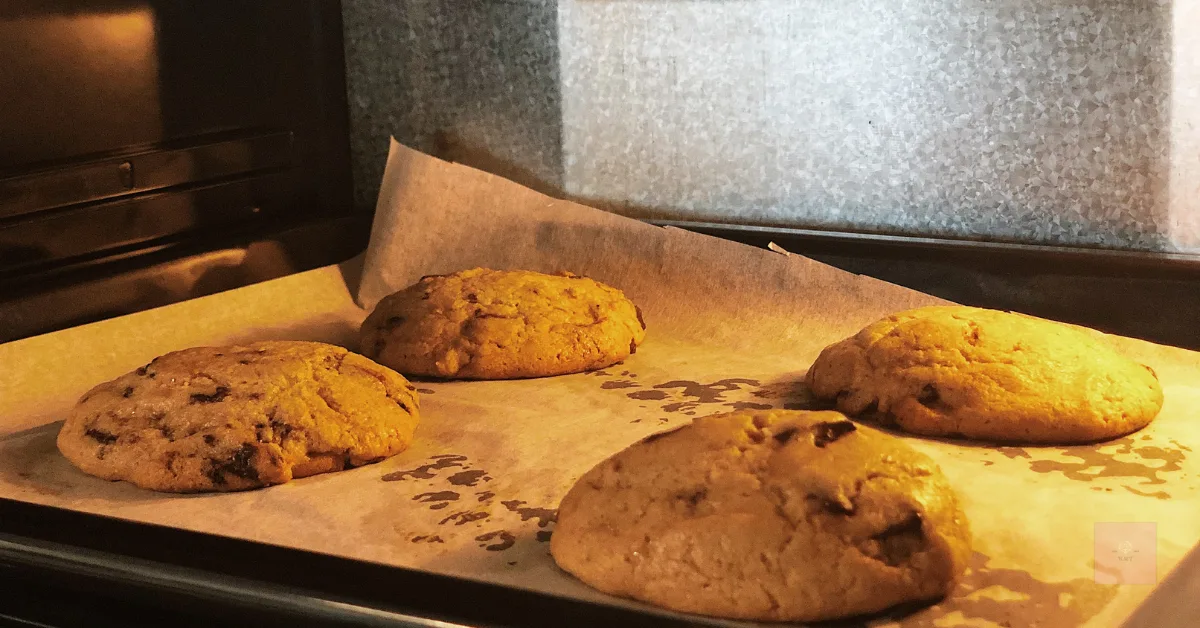
Snack: Half-baked cookies — because healing’s not done either. 🍪
🎭 Closing Line | Residency Night Three
Every goodbye is really just an intermission when love is that strong.
Because dogs like Samantha don’t just leave paw prints —
they leave a legacy of snacks, sass, and unconditional love that deserves a standing ovation. 🩷🐾
Curtain falls for tonight.
Encore next week. Bring the cookies, and the applause. 🍪👏
By June, I’d had enough kidney stone surgeries and ER visits to qualify for a punch card—“buy 10, get one free.”
Somewhere between surgery #2 and the umpteenth CT scan, I started calling my left kidney Lazarus—because every time she almost died, she clawed her way back. She was dramatic, she was stubborn, and she refused to stay buried.
So of course, when my mind finally broke and I went to inpatient to patch up the rest of me, Lazarus decided to join the rebellion. While I was learning to breathe again, she was busy throwing stones—literally.
I had a medical note that said I had to ride in the front seat at all times, as if I were a fragile package marked “handle with prayer.” I’d explain it to the van drivers between therapy sessions, trying not to laugh at how ridiculous my life had become: emotionally stable-ish, physically on probation.
⸻
💉 Scene 1 | The Stent Saga from Hell
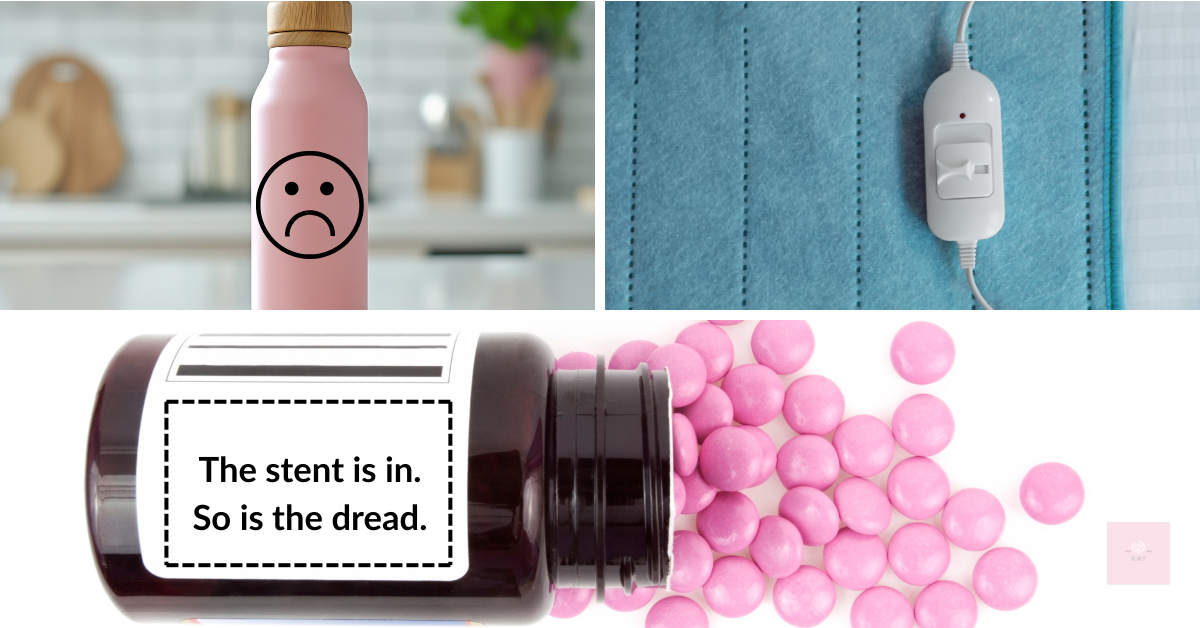
Earlier that year, I’d already had a stent. It was in place for 30+ days. And it was the longest—and worst—month of my life (more on that in a future post). So when I was told I needed another one, I knew the drill: constant discomfort, endless pain, heating pad worn like a diaper, and no ibuprofen for a week before its removal. I dreaded it but trusted the medical team, including Dr. God’s Gift. Turns out he was wrong, because this new one? A whole different level of torture.
As I’m coming out of anesthesia, the pain hits before consciousness does.
I’m flailing, thrashing, ripping out my IV because my body is in full rebellion. By the time I’m aware enough to realize what’s happening, I’m sobbing—ugly, primal sobs. The post-op nurse said she’s never seen someone react like that in her 10-year career!
They can’t discharge me for eight hours because nothing touches the pain. Nothing.
A few days later, when I finally meet with the local urologist, he tells me the stent needs to stay in for six to eight weeks.
I break.
Right there in his office, I start crying like a child. “I can’t live like this,” I tell him. And I mean it. He says there’s nothing he can do, that it should really be Mayo’s problem.
⸻
🧑⚕ Scene 2 | Enter Dr. Elspeth Lovewell
That’s when she appears—Dr. Elspeth Lovewell.
Chief Resident. Calm voice. Kind eyes.
The woman radiates competence and something rarer: actual empathy.
She doesn’t flinch at my pain. It turns out she helped with the stent placement, so she witnessed the chaos when I ripped out my IV, saw the panic that anesthesia doesn’t hide, and instead of writing me off as “dramatic,” she believed me.
After leaving the local urologist, I’m immediately on the phone with Mayo’s urology department begging for help. Dr. God’s Gift once again talks to me like he’s the God of Medicine, all ego and zero humanity. So I do what desperate people do: I ask for his boss. Turns out that was Dr. Lovewell—and miracle of miracles—she was standing right next to him, so he handed her the phone.
I tell her I need someone to give a f*** about me, someone who won’t minimize my pain or leave me drowning in bureaucracy. She listens. And when I ask her to be my surgeon—my person—until the end of this whole ordeal, she says yes. She also says if I can wait a week, she will remove the stent and do a laser lithotripsy. She also promises I’ll never have to deal with that other doctor again. I cry again—more from gratitude than pain.
Dr. Elspeth Lovewell—no, that’s not her real name, but until I ask her permission it’s the name she will have—doesn’t laugh when I tell her I named my kidney Lazarus. She just nods, like someone who knows that naming your pain sometimes makes it easier to let it go.
She’s brilliant and beautiful and honest. She’s the first doctor who makes me believe I might actually survive this with both my dignity and my sense of humor intact.
⸻
💥 Scene 3 | The Turning Point
When she takes me into surgery, the plan is simple: laser the stubborn stone out of my ureter. I call her Marigold Snicket because her journey was A Series of Unfortunate Events. But my body, ever the plot-twister, has other plans.
Snicket, it turns out, has grown tissue around the stone. She is completely sealed off. Impassable.
Instead of a quick procedure, it becomes an emergency.
They can’t fix it.
They have to bypass it.
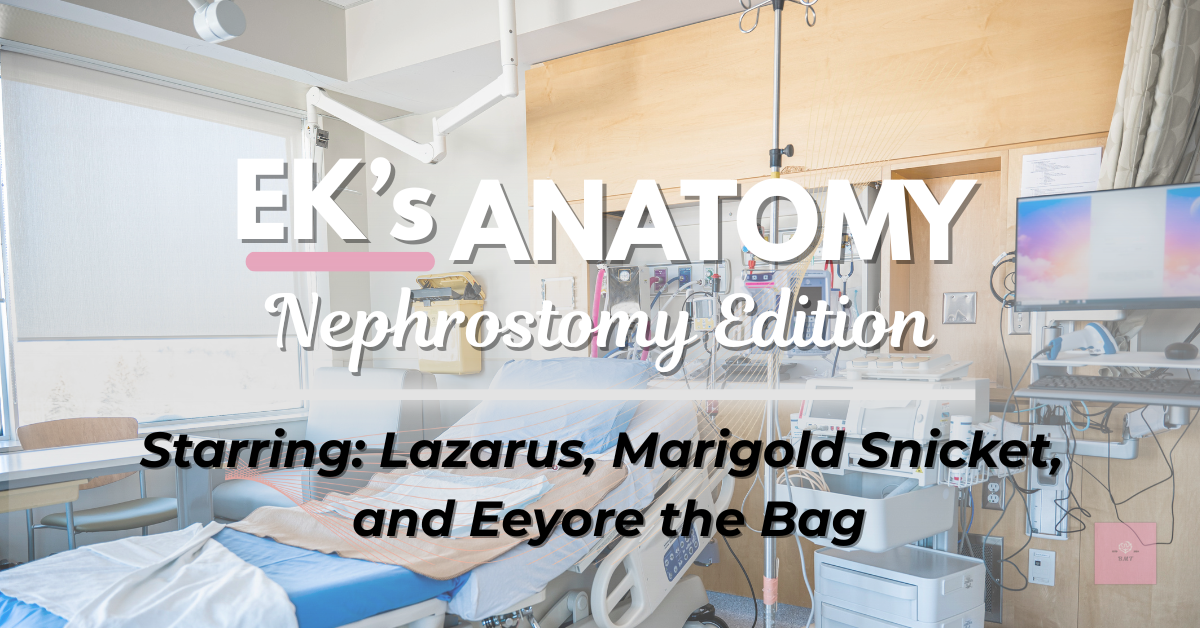
And just like that, I wake up with a nephrostomy bag.
It’s not pretty. It’s not poetic. It’s survival, hanging off my body in plastic form.
But Elspeth keeps her promise. She’s there when I wake up. She explains what happened. She doesn’t sugarcoat it, and she doesn’t disappear.
For the first time in months, I feel something close to trust.
As I got to know my bag, I decided to name it Eeyore because he arrived during a particularly dramatic medical plot twist, when Lazarus the Left Kidney staged a full protest and Marigold Snicket the Ureter decided to host a stone. Together, they prompted a spontaneous residency at the Mayo Clinic and gave Eeyore his time to shine.
He may not have chosen the spotlight—but now that he’s here, he’s making the most of it.
Quietly. In the corner. Slightly leaking existentialism. Plus every time I check it or empty it, I swear I hear him say, “Thanks for noticing me.”
⸻
🏥 Scene 4 | The Airbnb Sauna & the 2 a.m. ER Run
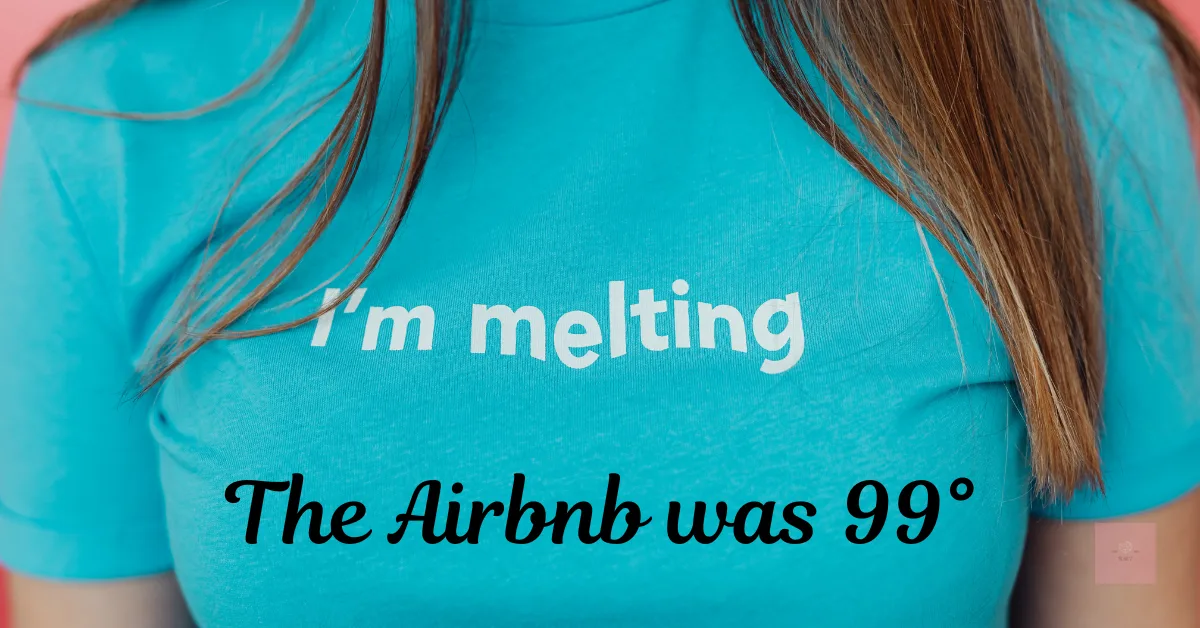
Fast-forward to our next Mayo Clinic trip. I’m supposed to be there for a renal scan, but first we have to survive the Airbnb from hell. We open the door at midnight, and the house greets us with a 99-degree sauna. The AC is off, the walls are sweating, and so am I.
Normally, a little heat would be fine—but I’ve got a fresh wound dressing around my nephrostomy tube that cannot get wet. Within minutes, it feels like my medical supplies are melting to my body.
We realize we’ve left the bandages back home. Cue CVS at 1 a.m., where he’s wandering the aisles like a discount-bin mummy. Back at the house, we try to peel off the old bandage only to discover it’s fused itself around the tube like industrial duct tape.
At 2 a.m., we admit defeat and go to the ER. The doctor looks at me like, “You came here for this?” I nod. She sighs. Then the nurse takes one look, mutters “Oh honey,” and spends 20 minutes delicately cutting the thing off.
When she’s finally done, she pats my arm and says, “You were right to come in.” Vindication! She even sends us home with professional-grade supplies—basically the Louis Vuitton of wound care.
Somewhere between the CVS fluorescent lights and the nurse’s kindness, I start laughing again. My life has become a sitcom nobody asked for, and somehow, I’m still the main character.
⸻
🩸 Scene 5 | The Lesson in the Mess
My body wasn’t betraying me—it was begging me to listen.
Pain wasn’t weakness; it was information.
And self-advocacy, I learned, isn’t rude—it’s holy.
You can love the medical team or strongly dislike some of them and still demand better care. You can be grateful and still say, “This isn’t enough.”
Advocate for yourself, because no one else truly will.
Fight until you get the help you need.
And when you find the people who meet you there—like Elspeth—never forget that grace wears scrubs, too.
⸻
💭 Reflection | The Day My Body Said No More
Sometimes your body doesn’t whisper; it screams. Mine screamed in blood work, CT scans, blood clots (more on that in a future post as well), and midnight ER visits. It said “no more” not to punish me, but to protect me.
Surrender wasn’t weakness. It was a kind of faith—the kind where you stop white-knuckling your own survival and start trusting the people who show up when you’re too exhausted to keep fighting.
Lazarus is still hanging on for now, defying the odds like she always does. But when her time comes, Dr. Lovewell will be there. And I’ll know she’s in good hands.
⸻
💕 Before You Go
If this post resonated, drop a comment or share it with someone who’s learning that rest isn’t weakness—it’s wisdom.
Next week, we’re diving into Grief Has No Calendar—But She Did Take My Dog — the story of love, loss, and vanilla ice cream.
⸻
🍦 Snack Call | Because Ritual Matters
Next week’s snack: Vanilla Ice Cream.
Because it’ll be all about my one true love, Samantha—and she loved it. I gave her some every night, and I still can’t scoop it without seeing her eyes.
⸻
🎭 Closing Line | Residency Night Two
I used to think strength meant outlasting the pain.
Now I know it means asking for help before the pain becomes the only language your body speaks.
Curtain falls for tonight. Encore next week. Bring your spoon. It’s going to be tender, sweet, and deeply human.
Hey. I almost started this with something poetic and heavy, but let’s be honest—this feels more like a comedy special with the lights dimmed.
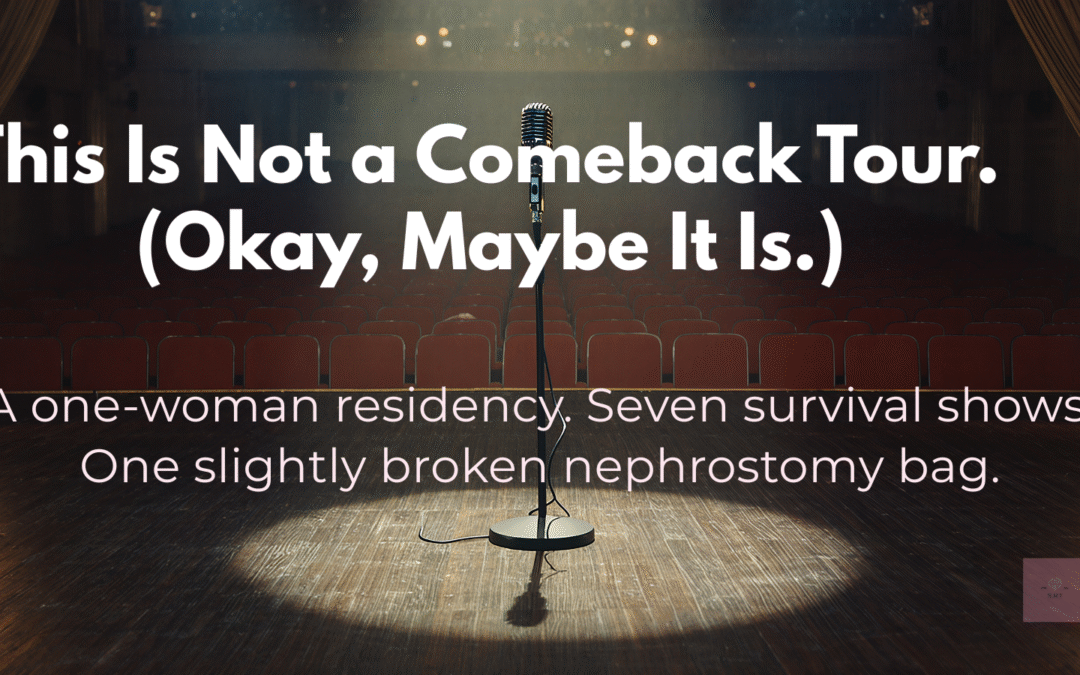
A spotlight. A mic stand. And me squinting into the crowd wondering, “You all brought snacks, right?”
🍮 Quick Headlines
I had a mental health breakdown.
I had several mental health breakthroughs.
And then my stubborn kidney finally said, “Nope. I’m done.”
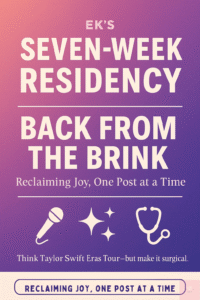
That’s the short version. The longer version is what we’ll spend the next seven posts unpacking.
For now, consider this the overture—the intro riff, the part where the curtain rises and you realize: this show is not going to be subtle.
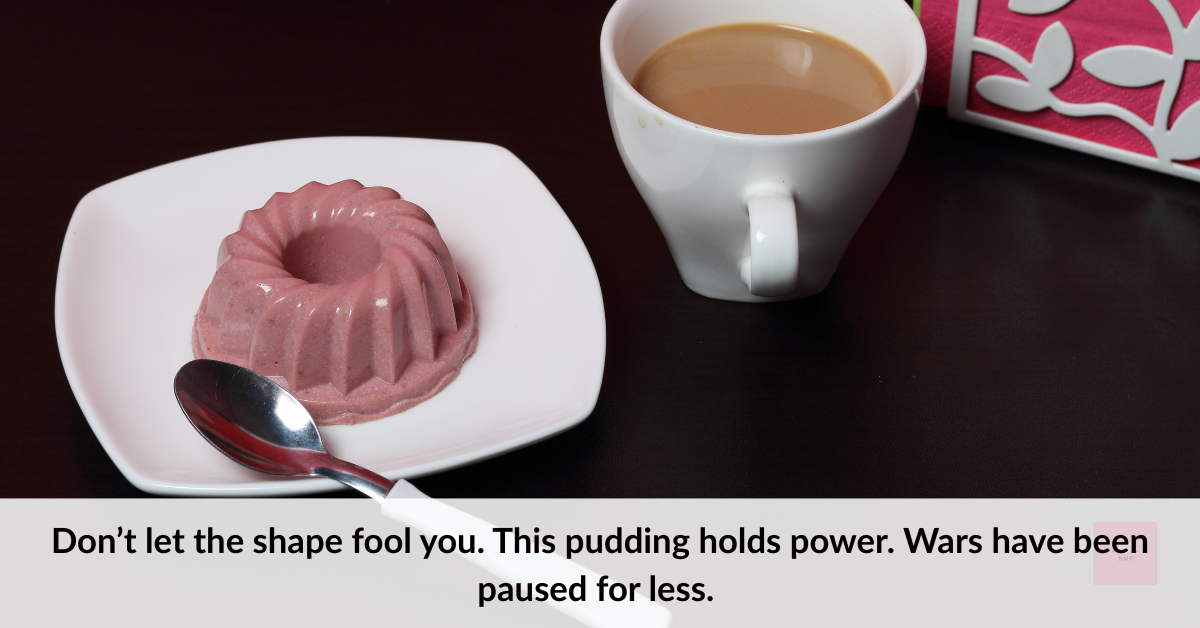
No snacks? That’s okay. But snacks are now part of the ritual. Pudding this week. Chocolate-dipped graham crackers next. And yes—I’ll be checking.
🍮 Pudding Diplomacy and the Laugh That Saved Me (Mental Health Recovery)
During my mental health recovery, finding humor became a lifeline — even small joys like pudding helped me cope with trauma and stay resilient in the hospital.
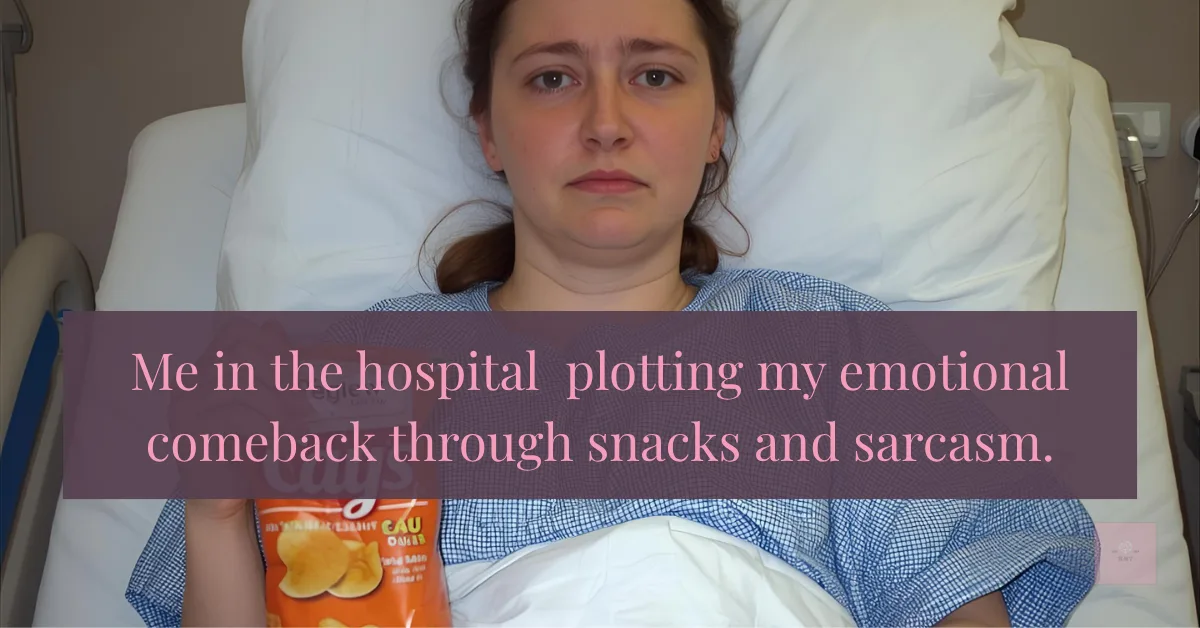
One of the strangest things about being hospitalized is how often you find yourself negotiating with people who have the upper hand. They hold the meds. They hold the charts. They hold your fate. You, meanwhile, are holding a flimsy paper gown closed with one hand and your dignity with the other.
So picture this: I’m lying there, freshly dosed with pain meds, low-key terrified my stomach is going to rebel. In a flash of logic that felt like survival instinct, I ask the nurse for pudding. Because pudding is safe. Pudding is soft. Pudding is what love would look like if it came in a cafeteria cup.
He deadpans back, “No. Not until the surgeon says so.”
And I, in all my medicated glory, glare up at him and say: “Alright. But if I throw up, it’s on you. Possibly literally.”
The ultrasound tech, who’d been silently preparing her machine, snorted so hard she almost dropped the gel. And that snort—it cracked something in me. A laugh escaped my own chest, weak and fragile but real. That tiny laugh was like an emergency exit sign blinking on in a burning building. It reminded me that humor was still in here with me, even when hope felt scarce.
I clung to that laugh. I banked it for the long nights.
💭 So… What the Hell Happened? (Trauma Recovery & Complex PTSD)
In the middle of breaking down, I experienced several trauma recovery breakthroughs, learning firsthand how complex PTSD can affect both mind and body.
I’ll get into the details in future posts, but here’s the bird’s-eye view:
I hit a mental health edge sharp enough that “edge” felt like an understatement. Breakdown sounds dramatic—but it was really a full-body refusal to keep going as-is.
In the middle of breaking, I also broke open. Breakthroughs came, not in glittering epiphanies, but in sweaty, tear-streaked truths I couldn’t ignore anymore.
My body staged a walkout. The kidney—stubborn, scarred, overworked—clocked out and left me holding the bag. (Literally: nephrostomy bag.)
That’s the nutshell version. More to come in the saga episodes—medical chaos, grief, faith, humor. Each one deserves its own stage time.
Writing this post is part of my ongoing mental health journey, showing that even in the chaos of hospital experiences and chronic illness, laughter and small victories matter.
This isn’t about reliving the pain. It’s about proof of life.
It’s for anyone who’s been hovering on their own edge, quietly wondering if the curtain will ever rise again.
This blog is a way to say: it can.
Maybe not all at once. Maybe not in the way you imagined.
But if you’re here—still breathing—there’s still time for an encore.
😂 Another Laugh I Didn’t Expect
In inpatient, one of the rules was that they took away our razors. Safety first, of course. But here’s the thing: no razors + long hospital days = some of us growing enough leg hair to braid.
And yes—we actually talked about it.
I remember sitting there with another patient, both of us looking down at our legs like:
“Well… guess we’re starting a biker gang or maybe a Renaissance fair troupe?”
We laughed—the kind of laugh that’s half surrender, half solidarity.
And yet—it mattered. It said:
We’re both still here. Still ridiculous. Still alive.
That’s the thing no one tells you about the brink: sometimes it isn’t epic. Sometimes it’s pudding negotiations and leg-hair braids.
⚖️ The Heaviness
Here’s the part that wasn’t funny at all: there was a night when everything in me felt heavy. Not tired. Not sad. Heavy.
It was the kind of heaviness that whispers:
“You can’t keep living like this.”
And in that moment, the choices looked stark: Exit stage left, permanently—or step into something radical, messy, uncertain: inpatient care.
I wish I could say it was noble. That I marched myself in like Joan of Arc on a healing crusade.
In reality, it was a tiny, trembling decision:
Picking up the phone.
Filling out an intake form.
Agreeing to sit in a waiting room when all I wanted was to disappear.
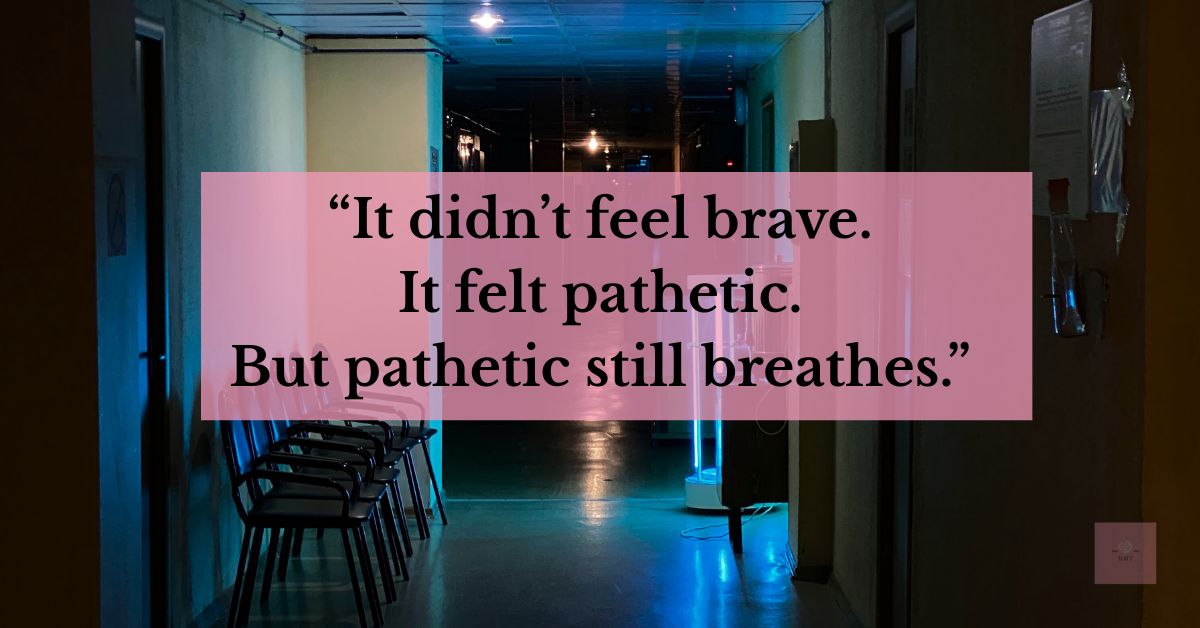
It didn’t feel brave.
It felt pathetic.
But pathetic still breathes. Pathetic still gets another shot. And pathetic, it turns out, was enough to keep me alive.
✋ What Saved Me in the Small Moments
The brink doesn’t get defeated in one big speech. It gets softened in tiny human things:
A nurse who brings you a warm blanket without being asked.
The patient who makes you laugh about braiding leg hair.
A doctor who admits softly, “This is going to be hard, but I’ll be here.”
An ultrasound tech who snorts at your pudding threat.
Those moments are like handholds in a cliff face. They don’t fix the climb. But they keep you from falling.
🎶 What This Post Is For (and What the Series Will Be)
This post is the overture. The confetti cannon that doesn’t blow the whole story. Just the taste-test before the seven-course meal.
Here’s the set-list you can expect:
Medical Chaos & Surrender — the kidney saga in all its absurd, body-hijacking detail.
Grief Has No Calendar—But She Did Take My Dog — the softness and devastation of losing Samantha.
Yes, I’m Still Healing. No, It’s Not Linear. — the truths of trauma recovery no one wants to admit.
Things I’ve Yelled at God (And What He Whispered Back).
I’m Allowed to Laugh While I’m Breaking. — on comedy as survival.
This Blog Is My Resurrection. — the mic drop.
This first post? It’s just the soundcheck.
💗 Gratitude, With Crumbs on My Shirt
If you’re reading this, thank you.
Even clicking on this counts as company.
If you’ve been checking in, sending snacks, praying, or just quietly rooting for me—I see you. I’m grateful.
Here’s what I ask in return:
Be kind to yourself. Especially if you’re the kind of person who reads blogs like mine—half for the humor, half for the survival instructions.
You don’t need to be noble. You don’t need to have it all together. You’re allowed to be inconveniently human.
💕 Before You Go
If this post resonated, drop a comment or share it with someone who might need a laugh between the breakdowns.
Next week, we’re diving into Medical Chaos & Surrender — the kidney saga you didn’t know you needed.
Bring your snack. It’s going to be real, messy, and a little funny.
🍫 Snack Call for Next Week
Next week’s snack: pudding is taken—so we’re leveling up to chocolate-dipped graham crackers.
Crunch + comfort.
Bring a sleeve. Bring two. Dunk one for the story, keep the other for your stubborn heart.
🎭 Closing Ritual
I nearly left the stage. I didn’t.
For now, I’m standing here with crumbs on my shirt and a story in my pocket.
Hey Everyone, I’m taking a short break for some personal matters and will be back soon. Thanks for your support, and I’ll see you in a couple of weeks.
Healing without the apology is one of the hardest things to do, but it’s also one of the most freeing. I have been hurt and burned many times by many different people. Today, I want to talk about two of them—my dad and my younger brother.
My Father’s Request for Forgiveness Without Accountability
In a previous post, I shared how my dad wrote me a letter requesting blanket forgiveness for past transgressions. The problem? He refuses to acknowledge any of his actions specifically or the depth of the scars he left behind.
Even now, when I dream about him (which, thankfully, isn’t often), I wake up consumed by abject fear. He had no hesitation in committing the acts that caused that fear, confident that I was either too scared to tell anyone or that, even if I did, no one would believe me—or worse, they wouldn’t care enough to intervene.
I could write a year’s worth of posts detailing his actions and still barely scratch the surface. When I used to try to keep him in my life, any attempt to express how his abuse affected me was met with denial, dismissal, or more of the same mistreatment.
The Silent Witnesses to Abuse
Sometimes, he was brazen enough to abuse me in front of others—even when I was a full-fledged adult. And those who did recognize it? They just stood by and did nothing. (More on them in a future post…)
My Brother: The Master Manipulator
The situation with my younger brother was eerily similar. While he had his moments of physical aggression, his primary weapons were rage, verbal abuse, and manipulation.
He could be incredibly charming, and I fell for his act for far too long.
One example: He once surprised me with an enormous bouquet of sunflowers—my favorite!—along with the sweetest card. I thought it was a heartfelt, loving gesture.
In reality, it was just part of his manipulation. Shortly after, he showed up at my door, expecting to live in my home for three months rent-free.
Like a helpless baby lamb—or so he wanted me to believe. But in truth, he was an extremely venomous snake, and I got bitten over and over again.
Gaslighting and Fake Apologies
When I started seeing through his lies, he occasionally threw out fake apologies, but more often than not, he gaslit me into believing everything was my fault. Gaslighting is a manipulative tactic that makes victims question their reality, and it’s a common tool used by emotionally abusive people. The more I recognized his coercion, the more he raged at me. He simply couldn’t comprehend how I was suddenly able to see him for what he truly was.
Choosing Healing Without the Apology Over False Hope
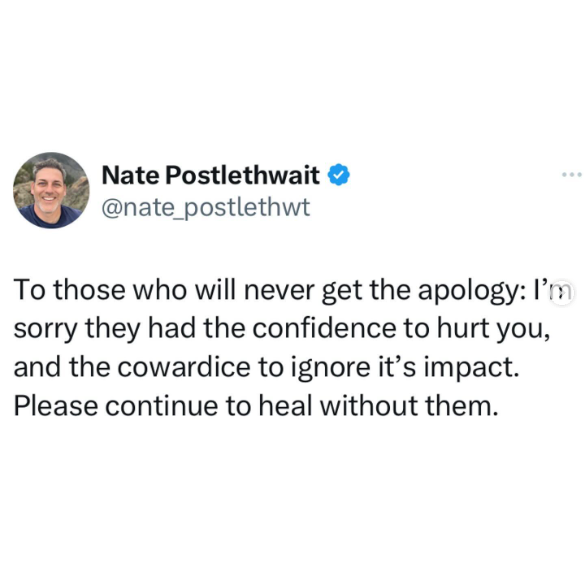
I have been no contact with my brother for three years now, and my dad for eight. They will never change. And I now understand that I don’t deserve to be treated that way—by them or anyone else. I have taken Nate Postlethwait’s words to heart and choose to continue healing without the apology.
A Side Note on Sharing My Story
I know I’ve alluded to painful experiences with my family members without always diving into specifics. I promise, I will share more. But here’s the truth:
I’m still gathering the courage to fully admit what was done to me.
I’m still processing the deep pain and despair that arise as I acknowledge their behaviors toward me.
While I have healed from many of their actions, much of what I endured is something I haven’t shared before. Please have patience with me. I’m a work in progress.
And if you, too, are waiting on an apology that will never come—please know that you don’t need it to move forward. You deserve peace. You deserve healing. And you deserve to thrive, even without them.
🌟 Let’s Talk 🌟
Have you ever struggled with waiting for an apology that never came? How did you find healing without it? Let’s support each other in the comments below. 💬✨
📢 If this post resonated with you, please share it with someone who needs to hear it. Healing is a journey best taken together. 💕 #CPTSDHealing #NoContact #HealingWithoutThem
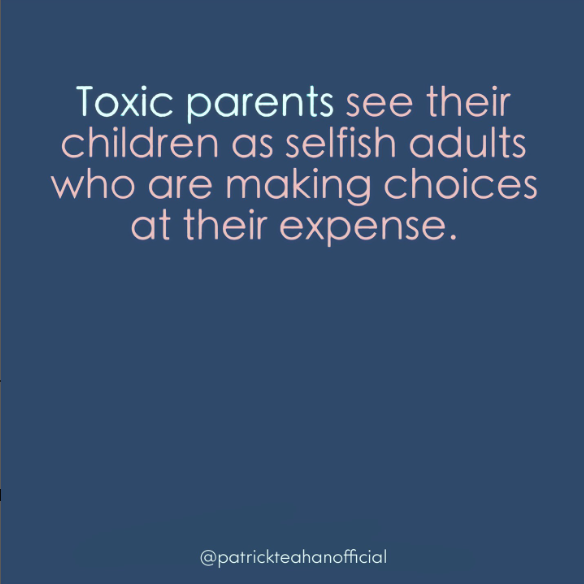
I recently came across a quote from @patrickteahanofficial that hit me like a freight train:
“Toxic parents see their children as selfish adults who are making choices at their expense.”
Reading those words was like looking in a mirror—every painful truth about my experience staring back at me. It instantly resurfaced memories of why I made the decision to go no contact with my dad almost eight years ago. His manipulation. His refusal to acknowledge harm. His belief that my boundaries were some personal attack against him. That quote reminded me of the moment I finally chose peace over the endless, exhausting cycle of explaining myself to someone who never really listened.
This post is a reflection on that decision, the weight it lifted, and why I continue to stand firm in protecting my mental health.
Why I Chose No Contact with My Toxic Parent
I’ve been no contact with my dad for nearly eight years now. I call him “Dad” because, well, that’s just his title—not a term of endearment. Our relationship was volatile, to say the least, and I’ll be unpacking pieces of it across multiple posts.
I cut him off without a grand announcement, without an explanation, without a dramatic confrontation. I just did it. Because it was the best thing I could do for my sanity. He was a master of physical, verbal, and emotional abuse. One sentence from him could shatter my entire world. So, I walked away. I changed my number. I built a life free from the chaos he thrived on.

Of course, he didn’t take it well. He weaponized my siblings—full, step, and half—trying to guilt, shame, and manipulate his way back in. But I was ready for his games, and every attempt failed.
The Manipulation Tactic That Reinforced My No Contact Decision
After about four years of silence, I thought maybe, just maybe, he had finally gotten the message. But I never let my guard down. And sure enough, earlier this year, he reemerged—this time, via certified letter.
For a split second, I hoped it might be an “I’m dying” letter. But then I remembered: only the good die young, and well… let’s just say I wasn’t that lucky.
Instead, the letter read like a greatest-hits compilation of manipulation:
“Your mother would want us to reconcile.” (Weaponizing the dead? Classic.)
“My heart and life are empty without you.” (Should’ve thought about that before.)
“I forgive you, so it’s time to forgive me.”
Wait. Hold up. He forgave ME?

Forgave me? For what—prioritizing my mental health? For choosing peace over chaos? For not playing along in his circus of control anymore? The sheer audacity sent me even deeper into my unwavering, healthy, no-contact existence.
And let’s be clear—nowhere in that letter was there a single acknowledgment of the harm he caused. Not one. Just a declaration that it was my turn to “reciprocate forgiveness” as if this were some kind of transactional exchange.
Protecting My Peace: Recognizing Red Flags & Staying Firm
The night before I got the certified letter notification, I had a nightmare about him. A reminder from my spirit guides of exactly what I had left behind. A warning not to let nostalgia or wishful thinking cloud reality.
And sure enough, I needed that clarity. Because his letter ended with: “I’m coming to town and want to see you.”
And my response? A firm, clear, absolute NOPE—delivered through a family member. And just to be extra sure, I left town. Because if there’s one thing I know about my father, it’s that no is a word he refuses to accept.
No Contact is Hard, But Peace is Priceless
Going no contact wasn’t easy, but it was necessary. His latest attempt at manipulation only reinforced why I made this choice in the first place. Peace is priceless, and I refuse to trade it for guilt, obligation, or the illusion of reconciliation that serves only his interests.
To anyone struggling with similar decisions: your boundaries are valid. Protecting your peace isn’t just a choice—it’s survival.
💬 Have you ever had a toxic family member try to guilt you back into a relationship? How did you handle it? Let’s share strategies and support each other in the comments!
This post discusses trauma, therapy, and the emotional weight of unspoken experiences. If these topics are sensitive for you, please take care while reading.
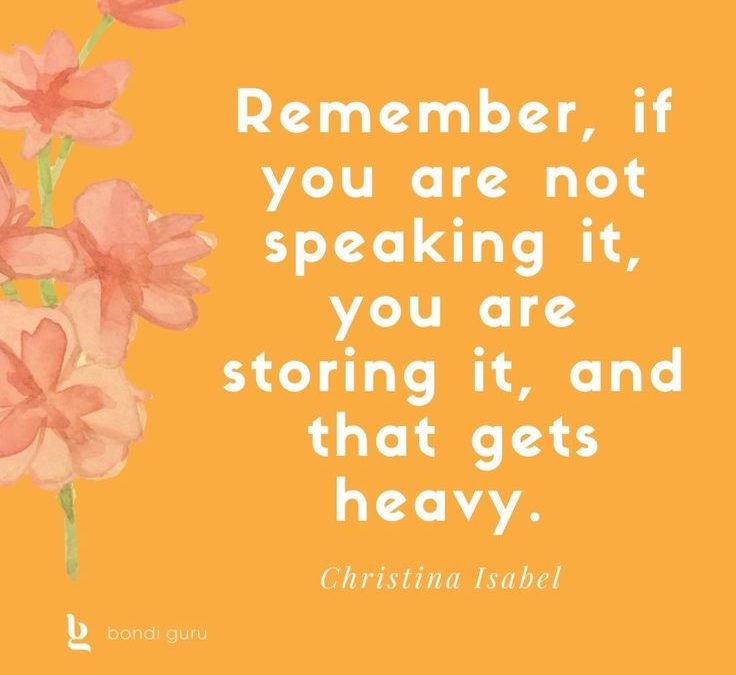
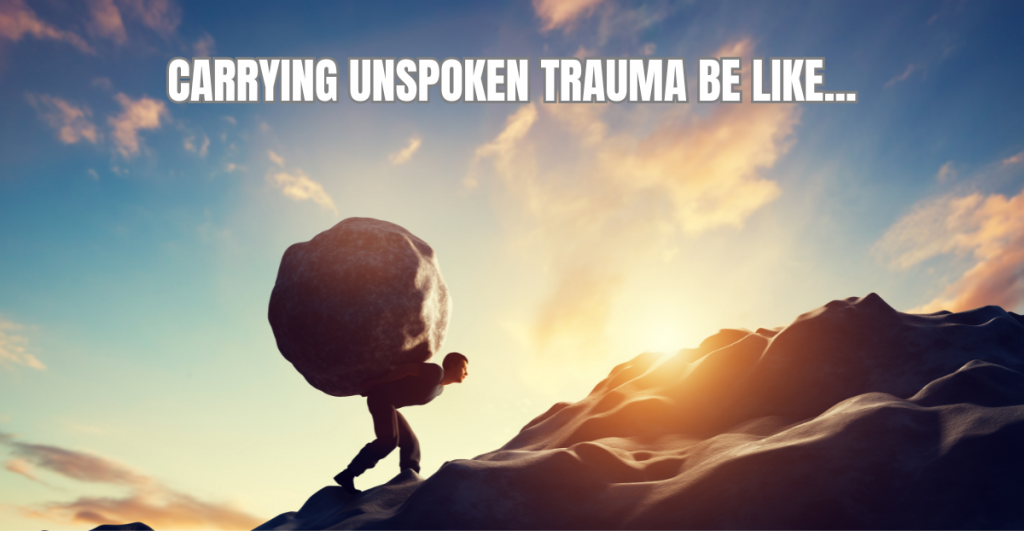
Unspoken trauma weighs us down in ways we don’t always recognize. I’ve seen this quote many times on social media and in self-help books:
“Remember, if you are not speaking it, you are storing it, and that gets heavy.” – Christina Isobel
For the longest time, I didn’t understand how unspoken trauma impacts emotional healing.
Why Holding in Trauma Feels So Heavy
I spent so much of my life protecting everyone else from my experiences and traumas. For a long time, I stayed silent because I was afraid of what they would think of me (which I now know is a shame response, and we’ll dive deeper into that in future posts). I was also afraid they might not believe me or might act as though what I’d experienced wasn’t a big deal.
They would be wrong for either of those reactions, but back then, I didn’t love myself enough to know that.
Why Therapy Feels Scary (But Can Help)
For years, I even kept my therapist at arm’s length. I didn’t tell her what I called my “bombshells” (aka big T traumas) for the first five years. I shared some of my little t traumas, but looking back, some of them were actually big T—I was just in denial.
The first time I finally spoke a big T trauma, I did it while walking to the door at the end of a session… and then I didn’t come back for over two years. 10/10 would not recommend as a therapeutic strategy.
When I did return and reestablish a rapport with her, I found a new way to keep my guard up—I would drop a heavy truth bomb in the last three minutes of a session and then act like I hadn’t said anything the next week. Instead, I’d steer the conversation toward surface-level topics. It was basically the emotional version of sending a risky text and throwing my phone across the room.
How I Finally Faced My Unspoken Trauma
Eventually, my therapist and I developed a trauma recovery plan: I would list all my big T’s in one session so she could finally see the full picture of my life. Then, we would slowly start dissecting them as I felt ready.
At the time, I didn’t think I’d ever be ready. And honestly, when I finally laid it all out, I think she was just as taken aback as I was.
The Relief of Letting Go: My Healing Journey
But something changed. Once I spoke my darkest secrets out loud, I felt lighter. And as we worked through my emotions surrounding them, I felt even lighter.
I hadn’t realized how heavy everything was until I finally trusted her enough to lay my burden down—and more importantly, to recognize that she didn’t see it as a burden at all. She saw it as something she was willing to help me carry.
Final Thoughts
If you’re someone who’s still carrying unspoken trauma, I get it. Speaking it out loud can feel impossible. But I promise you—there’s something liberating about no longer holding it alone.
Start small. Write it down. Say it in the mirror. Find a safe person. And when you’re ready, lay it down. You don’t have to carry it forever.
Your Turn: Let’s Talk
Have you ever experienced the weight of unspoken trauma? If this post resonated, share it with someone who might need it. If you feel comfortable, share your thoughts in the comments. What has helped you lighten the load? Your story might help someone else feel less alone. 💛